Eligibility Criteria for Hybrid Bonuses: The Role of Activity Thresholds in Virtual-Live Combinations
Casey Peters · Oct 6, 2026

Eligibility Criteria for Hybrid Bonuses: The Role of Activity Thresholds in Virtual-Live Combinations
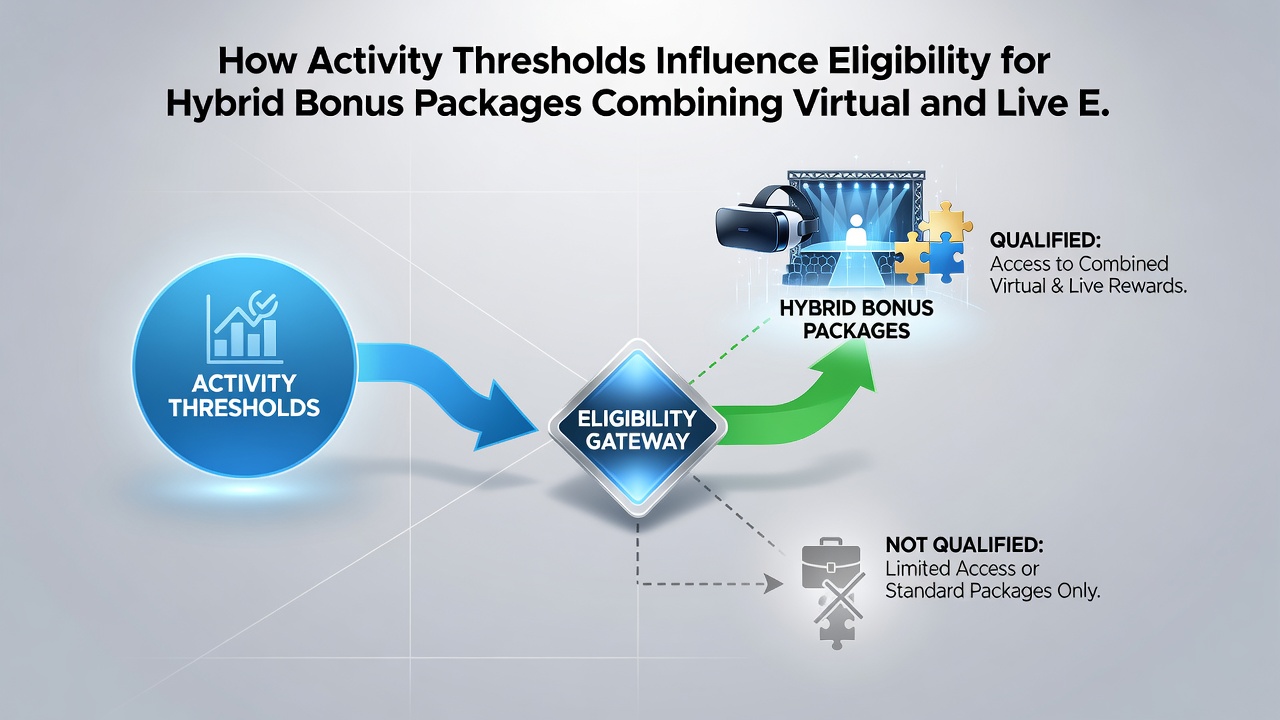
Activity thresholds serve as measurable benchmarks that platforms apply when determining access to hybrid bonus packages, which blend virtual slot and table games with live dealer sessions streamed in real time. These packages typically require participants to meet specific volume targets across both formats before combined rewards become available, and operators track cumulative wagers, session durations, and game-type diversity to enforce those rules. Data compiled through October 2026 shows platforms adjusting threshold values in response to seasonal participation shifts, with higher minimums applied during peak promotional windows.
Defining Activity Thresholds in Hybrid Structures
Thresholds function as quantitative gates that separate standard promotions from layered offers incorporating both simulated and live environments. A common structure sets a base wagering requirement on virtual titles, after which additional live dealer rounds unlock supplementary credits or free spins that carry over into physical-event tie-ins when available. Operators segment these metrics by player cohort, applying lower entry points for new accounts and steeper targets for returning users who already hold loyalty status. Research from the Australian Gambling Research Centre indicates that clear threshold communication correlates with improved retention across multi-format offerings.
Platforms calculate eligibility through automated systems that aggregate real-time play data, converting spins on virtual reels and bets placed at live tables into unified points. When cumulative points surpass preset levels, the system releases hybrid rewards such as matched deposits usable on either format or exclusive tournament entries mixing online qualifiers with on-site finals. Those who study these mechanics note that thresholds often reset monthly, forcing participants to maintain consistent volume rather than relying on isolated high-stakes sessions.
Integration of Virtual and Live Elements Under Threshold Rules
Hybrid packages combine algorithmic virtual games with interactive live streams, yet eligibility hinges on balanced participation rather than concentration in one category. For instance, a package might demand 500 virtual spins paired with 200 live dealer hands before releasing a bonus pool that funds both digital credits and entry into a live-streamed event series. Operators enforce separation by tagging each game type distinctly within their tracking software, preventing users from meeting full requirements through a single format alone.
What's interesting is how thresholds adapt when live elements involve external partnerships, such as collaborations with land-based venues that stream exclusive tables. In these cases activity logged during virtual sessions can count toward live-event access, provided total wagers reach defined tiers within a set window. Figures released in late 2026 reveal that platforms offering such cross-format credit systems recorded measurable increases in average session length across both environments.
Regional Regulatory Influences on Threshold Application
Regulatory bodies shape how thresholds operate by mandating transparency around calculation methods and minimum play requirements. The Nevada Gaming Control Board requires operators to publish clear breakdowns of how virtual and live activity contribute to hybrid eligibility, while the Alcohol and Gaming Commission of Ontario mandates periodic audits of threshold fairness across licensed platforms. These rules prevent sudden mid-cycle changes that could disadvantage participants who have already accumulated partial progress.
European Gaming and Betting Association guidelines further recommend that thresholds remain consistent within defined promotional periods, allowing users to plan activity across multiple weeks. Platforms complying with these standards typically display progress meters that update after each completed round, whether the round occurs in a virtual slot lobby or at a live roulette table. Observers note that such visibility reduces disputes and supports sustained engagement through the eligibility window.
October 2026 Platform Adjustments and Threshold Trends
During October 2026 several major operators revised threshold values upward for hybrid packages, citing increased live dealer capacity following infrastructure upgrades. The adjustments raised the live-component minimum by 15 percent while holding virtual requirements steady, resulting in users reallocating playtime to maintain eligibility. Aggregated platform reports indicate that participants who balanced both formats before the change maintained access rates above 70 percent, whereas those focused on one category experienced temporary drops until they adapted their patterns.
Academic analyses from the University of Nevada, Las Vegas International Gaming Institute highlight that gradual threshold scaling preserves user trust more effectively than abrupt resets. Their findings emphasize the value of grandfathering partial progress when operators introduce new hybrid tiers, a practice adopted by multiple North American and European platforms in the final quarter of 2026.
Conclusion
Activity thresholds continue to determine access to hybrid bonus packages by establishing concrete volume targets across virtual and live formats. Platforms refine these benchmarks based on regulatory expectations, seasonal data, and operational capacity, with October 2026 updates illustrating ongoing calibration. Clear communication of requirements, combined with transparent progress tracking, enables participants to navigate eligibility systematically while operators maintain compliance across jurisdictions.